20140626

Magnesium and Memory...

Magnesium Supplements Could Improve Memory and Cognitive Ability

November 1, 2012
brain-boost
After a decade of research hinting that magnesium supplements could potentially boost your memory and cognitive abilities, it’s finally being put into a small clinical trial. The research is being led by the biopharmaceutical company Magceutics, of Hayward, California, and they began testing the ability of their supplement Magtein to boost magnesium ion levels in the brain.
The trial will track whether the ions can decrease anxiety and improve sleep quality, as well as see if there are changes in memory and cognitive ability in the participants. The trial only has 50 people, so any results won’t allow scientists to draw definite conclusions.
Eventually, they will also test if Magtein can be used to treat ADHD and Alzheimer’s disease. Many scientists are skeptic about this small trial and whether it will be able to prove anything conclusively. So far, the product has been mostly tested in rats and in Guosong Liu himself, a neuroscientist at Tsinghua University in Beijing and founder of Magceutics.
In 2004, Liu and his team showed that magnesium had a key role in synaptic changes that boosted memory in mice. In 2010, he showed that magnesium in rats could help improve their short term and long term memory.
Research in humans has shown that oral magnesium supplements in aged patients can increase the duration of deep sleep and decrease the levels of the stress hormone cortisol. But the pharmaceutical industry has been unenthusiastic about funding research since magnesium is freely available and unpatentable.
The challenge is find a compound that could get the magnesium to the brain. Magtein is supposed to solve this problem. It contains magnesium threonate, and tests have shown that the compound boosts levels of magnesium in rats’ brains by 15% after 24 days.
Roughly 100,000 people in the USA are already taking the compound as a supplement. Several thousand patients are needed to provide convincing evidence of the effectiveness of these magnesium compounds.
brain-boost

FDA's New Approval

FDA Approved Arthritis Drug Spurs Hair Growth

June 24, 2014
Arthritis Drug Spurs Hair Growth
These panels show the patient’s head a) before treatmen with tofacitinib, b) two months into treatment, c) five months into treatment, and d) eight months into treatment.
Using an existing FDA-approved drug for rheumatoid arthritis called tofacitinib citrate, a man with alopecia universalis has grown a full head of hair, eyebrows and eyelashes, as well as facial, armpit, and other hair.
A man with almost no hair on his body has grown a full head of it after a novel treatment by doctors at Yale University.
There is currently no cure or long-term treatment for alopecia universalis, the disease that left the 25-year-old patient bare of hair. This is the first reported case of a successful targeted treatment for the rare, highly visible disease.
The patient has also grown eyebrows and eyelashes, as well as facial, armpit, and other hair, which he lacked at the time he sought help.
“The results are exactly what we hoped for,” said Dr. Brett A. King, assistant professor of dermatology at Yale University School of Medicine and senior author of a paper reporting the results online June 18 in the Journal of Investigative Dermatology. “This is a huge step forward in the treatment of patients with this condition. While it’s one case, we anticipated the successful treatment of this man based on our current understanding of the disease and the drug. We believe the same results will be duplicated in other patients, and we plan to try.”
The patient had previously been diagnosed with both alopecia universalis, a disease that results in loss of all body hair, and plaque psoriasis, a condition characterized by scaly red areas of skin. The only hair on his body was within the psoriasis plaques on his head. He was referred to Yale Dermatology for treatment of the psoriasis. The alopecia universalis had never been treated.
King believed it might be possible to address both diseases simultaneously using an existing FDA-approved drug for rheumatoid arthritis called tofacitinib citrate. The drug had been used successfully for treatingpsoriasis in humans. It had also reversed alopecia areata, a less extreme form of alopecia, in mice.
Arthritis Drug Spurs Hair Growth
“There are no good options for long-term treatment of alopecia universalis,” said King, a clinician interested in the treatment of rare but devastating skin diseases. “The best available science suggested this might work, and it has.”
After two months on tofacitinib at 10 mg daily, the patient’s psoriasis showed some improvement, and the man had grown scalp and facial hair — the first hair he’d grown there in seven years. After three more months of therapy at 15 mg daily, the patient had completely regrown scalp hair and also had clearly visible eyebrows, eyelashes, and facial hair, as well as armpit and other hair, the doctors said.
“By eight months there was full regrowth of hair,” said co-author Dr. Brittany G. Craiglow. “The patient has reported feeling no side effects, and we’ve seen no lab test abnormalities, either.”
Tofacitinib appears to spur hair regrowth in a patient with alopecia universalis by turning off the immune system attack on hair follicles that is prompted by the disease, King said.
The drug helps in some, but not all, cases of psoriasis, and was mildly effective in this patient’s case, the authors said.
King has submitted a proposal for a clinical trial involving a cream form of tofacitinib as a treatment for alopecia areata.
Arthritis Drug Spurs Hair Growth
He cited work by Columbia University scientist Angela Christiano as the reason he decided to try tofacitinib as a therapy in this patient with both alopecia universalis and psoriasis. She has shown thattofacitinib and a related medicine reverse alopecia areata in mice. King called her work exemplary and a clear example of how society’s investment in science research leads to improvement in human life.
“This case highlights the interplay between advances in science and the treatment of disease,” he said, “and it provides a compelling example of the ways in which an increasingly complex understanding of medicine, combined with ingenuity in treatment, benefits patients.”
The paper is titled “Killing Two Birds with One Stone: Oral Tofacitinib Reverses Alopecia Universalis in a Patient with Plaque Psoriasis.”

 Images available.
Publication: Brittany G Craiglow and Brett A King, “Killing Two Birds with One Stone: Oral Tofacitinib Reverses Alopecia Universalis in a Patient with Plaque Psoriasis,” Journal of Investigative Dermatology, 2014; doi: 10.1038/jid.2014.260
Source: Eric Gershon, Yale University

Memory and an Enyme?

Enzyme’s Essential Role in Long-Term Memory Refuted

January 4, 2013
Credit: Thinkstock
Credit: Thinkstock
Credit: Thinkstock

Credit: Thinkstock
The enzyme protein kinase M-ζ (PKM-ζ) was thought to be a fixture of long-term memory, as its inhibition could erase old memories, whilst adding it could strengthen faded ones. Two independent groups have challenged the role of this memory molecule by developing mice that completely lack it and show no detectable memory problems.
The scientists published their findings in the journal Nature¹ ². Back in 2007, Todd Sacktor was able to wipe out month-old memories of unpleasant smells in rats by injecting their brains with ZIP, a peptide that was meant to block PKM-ζ. Other teams obtained similar results, erasing different kinds of memory by injecting ZIP into the brains of rodents, flies and sea slugs. In 2011, Sacktor was able to strengthen the memory of unpleasant tastes in rats by injecting their brains with viruses carrying extra copies of PKM-ζ.
These studies suggested that long-term memory was fragile and depended on the continuous activity of a single enzyme. Much of this data depended on the actions of ZIP. Richard Huganir of John Hopkins University in Baltimore, Maryland, deleted two genes in embryonic mice, one for PKM-ζ and one for PKC-ζ. Robert Messing and his colleagues at the University of California in San Francisco obtained similar results.
Neither of these groups of mice showed any problems with their memory. Messing’s mice formed persistent memories for fears, objects, places and movements in behavioral tests. Huganir’s mice showed normal levels of long-term potentiation, the strengthening of synapses between two neurons. This is linked to learning and memory.
Our study conclusively says that PKM-ζ doesn’t regulate memory, states Huganir. Surprisingly, both teams found that ZIP could still disrupt established memories in their mice, despite the lack of PKM-ζ. Lenora Volk, part of Huganir’s team, states that their study doesn’t rule out the possibility that PKM-ζ plays a role in some forms of memory, but it’s not the essential master regulator of memory that the literature suggests.
Sacktor thinks that a different gene might compensate for the loss, which is something that routinely happens in mice that have had some genes deleted. Sacktor says that the proteins PKM-ι or PKM-λ may be involved.
Huganir’s team created mice whose PKM-ζ gene could be deleted by giving them a specific drug. This allowed them to deplete the enzyme during adulthood, after the mice had grown up with normal levels. These animals still showed normal long-term potentiation.
References

New Dinosaur Found!

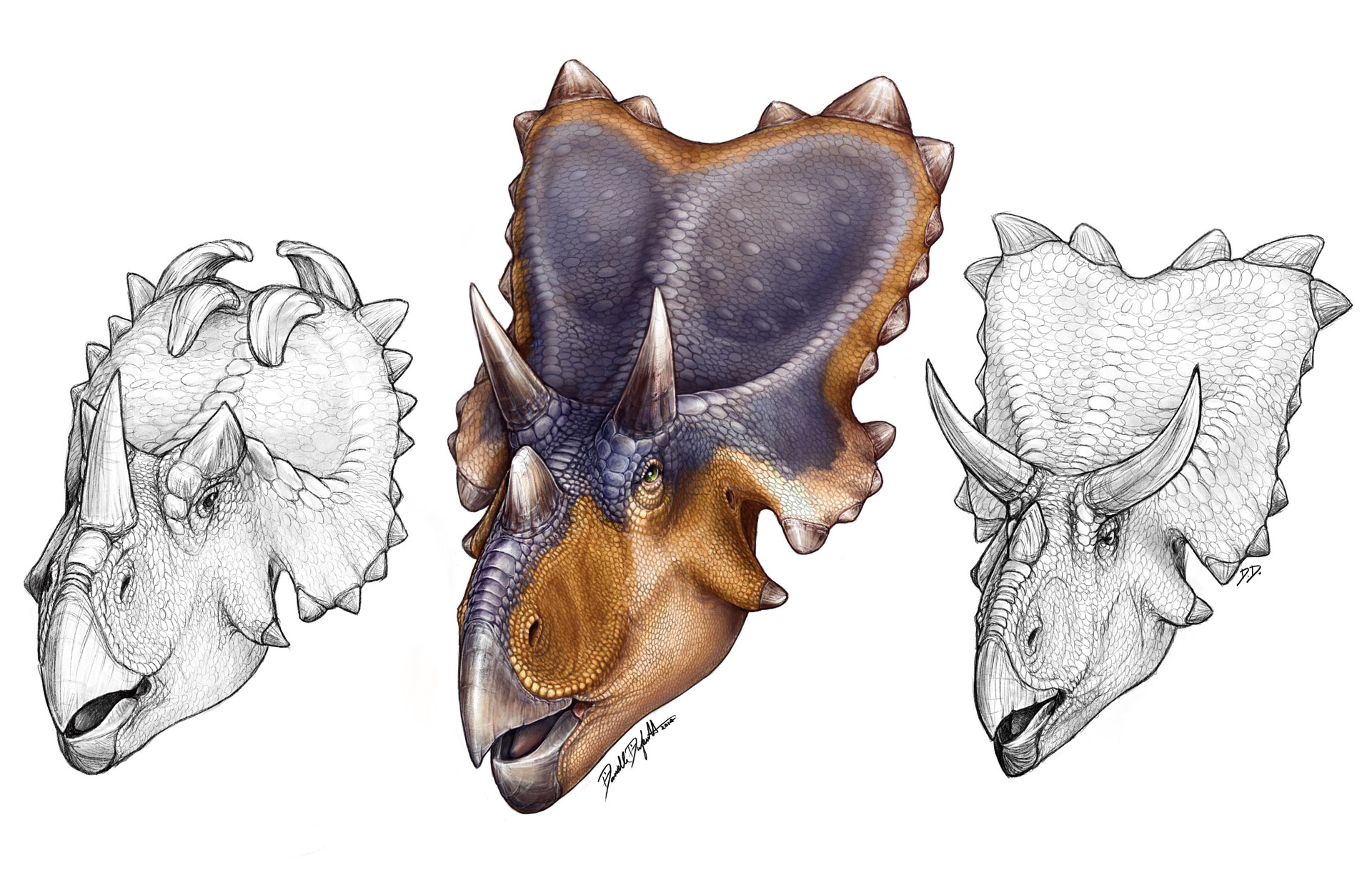
Scientists Discover New Species of Horned Dinosaur – Mercuriceratops Gemini

June 19, 2014
New Species of Horned Dinosaur Mercuriceratops Gemini
Mercuriceratops gemini (center) compared to horned dinosaurs Centrosaurus (left) and Chasmosaurus (right), also from the Dinosaur Park Formation of Alberta, Canada. Credit: Danielle Dufault
A newly published study details the discover of a new species of dinosaur named Mercuriceratops Gemini, which was approximately 6 meters long and lived about 77 million years ago during the Late Cretaceous Period.
Cleveland, Ohio – Scientists have named a new species of horned dinosaur (ceratopsian) based on fossils collected from Montana in the United States and Alberta, Canada. Mercuriceratops (mer-cure-E-sare-ah-tops) gemini was approximately 6 meters (20 feet) long and weighed more than 2 tons. It lived about 77 million years ago during the Late Cretaceous Period. Research describing the new species is published online in the journal Naturwissenschaften.
Mercuriceratops (Mercuri + ceratops) means “Mercury horned-face,” referring to the wing-like ornamentation on its head that resembles the wings on the helmet of the Roman god, Mercury. The name “gemini” refers to the almost identical twin specimens found in north central Montana and the UNESCO World Heritage Site, Dinosaur Provincial Park, in Alberta, Canada. Mercuriceratops had a parrot-like beak and probably had two long brow horns above its eyes. It was a plant-eating dinosaur.
“Mercuriceratops took a unique evolutionary path that shaped the large frill on the back of its skull into protruding wings like the decorative fins on classic 1950s cars. It definitively would have stood out from the herd during the Late Cretaceous,” said lead author Dr. Michael Ryan, curator of vertebrate paleontology at The Cleveland Museum of Natural History. “Horned dinosaurs in North America used their elaborate skull ornamentation to identify each other and to attract mates—not just for protection from predators. The wing-like protrusions on the sides of its frill may have offered male Mercuriceratops a competitive advantage in attracting mates.”
“The butterfly-shaped frill, or neck shield, of Mercuriceratops is unlike anything we have seen before,” said co-author Dr. David Evans, curator of vertebrate palaeontology at the Royal Ontario Museum. “Mercuriceratops shows that evolution gave rise to much greater variation in horned dinosaur headgear than we had previously suspected.”
The new dinosaur is described from skull fragments from two individuals collected from the Judith River Formation of Montana and the Dinosaur Park Formation of Alberta. The Montana specimen was originally collected on private land and acquired by the Royal Ontario Museum. The Alberta specimen was collected by Susan Owen-Kagen, a preparator in Dr. Philip Currie’s lab at the University of Alberta. “Susan showed me her specimen during one of my trips to Alberta,” said Ryan. “I instantly recognized it as being from the same type of dinosaur that the Royal Ontario Museum had from Montana.”
The Alberta specimen confirmed that the fossil from Montana was not a pathological specimen, nor had it somehow been distorted during the process of fossilization,” said Dr. Philip Currie, professor and Canada research chair in dinosaur paleobiology at the University of Alberta. “The two fossils—squamosal bones from the side of the frill—have all the features you would expect, just presented in a unique shape.”
“This discovery of a previously unknown species in relatively well-studied rocks underscores that we still have many more new species of dinosaurs to left to find,” said co-author Dr. Mark Loewen, research associate at the Natural History Museum of Utah.
This dinosaur is just the latest in a series of new finds being made by Ryan and Evans as part of their Southern Alberta Dinosaur Project, which is designed to fill in gaps in our knowledge of Late Cretaceous dinosaurs and study their evolution. This project focuses on the paleontology of some of oldest dinosaur-bearing rocks in Alberta and the neighbouring rocks of northern Montana that are of the same age.
Publication: Michael J. Ryan, et al., “A new chasmosaurine from northern Laramidia expands frill disparity in ceratopsid dinosaurs,” Naturwissenschaften, June 2014, Volume 101, Issue 6, pp 505-512; doi:10.1007/s00114-014-1183-1
Source: Cleveland Museum of Natural History
Image: Danielle Dufault

Memory and Fear in Rats?

Scientists Confirm Cellular Basis for Memory by Implanting and Erasing Fear in Rats

June 2, 2014
Researchers Confirm Cellular Basis for Memory by Implanting and Erasing Fear
By controlling rats’ brain cells they had genetically engineered to respond to light, researchers were able to create fearful memories of events that never happened — and then to erase those memories again. Credit: Sadegh Nabavi and Sina Alizadeh
In a newly published study, scientists at the University of California show the ability to selectively remove a memory and predictably reactivate it by stimulating nerves in the brain at frequencies that are known to weaken and strengthen the connections between nerve cells.
Researchers at the University of California, San Diego School of Medicine have erased and reactivated memories in rats, profoundly altering the animals’ reaction to past events.
The study, published in the June 1 advanced online issue of the journal Nature, is the first to show the ability to selectively remove a memory and predictably reactivate it by stimulating nerves in the brain at frequencies that are known to weaken and strengthen the connections between nerve cells, called synapses.
“We can form a memory, erase that memory and we can reactivate it, at will, by applying a stimulus that selectively strengthens or weakens synaptic connections,” said Roberto Malinow, MD, PhD, professor of neurosciences and senior author of the study.
Scientists optically stimulated a group of nerves in a rat’s brain that had been genetically modified to make them sensitive to light, and simultaneously delivered an electrical shock to the animal’s foot. The rats soon learned to associate the optical nerve stimulation with pain and displayed fear behaviors when these nerves were stimulated.
Analyses showed chemical changes within the optically stimulated nerve synapses, indicative of synaptic strengthening.
In the next stage of the experiment, the research team demonstrated the ability to weaken this circuitry by stimulating the same nerves with a memory-erasing, low-frequency train of optical pulses. These rats subsequently no longer responded to the original nerve stimulation with fear, suggesting the pain-association memory had been erased.
In what may be the study’s most startlingly discovery, scientists found they could re-activate the lost memory by re-stimulating the same nerves with a memory-forming, high-frequency train of optical pulses. These re-conditioned rats once again responded to the original stimulation with fear, even though they had not had their feet re-shocked.
“We can cause an animal to have fear and then not have fear and then to have fear again by stimulating the nerves at frequencies that strengthen or weaken the synapses,” said Sadegh Nabavi, a postdoctoral researcher in the Malinow lab and the study’s lead author.
In terms of potential clinical applications, Malinow, who holds the Shiley Endowed Chair in Alzheimer’s Disease Research in Honor of Dr. Leon Thal, noted that the beta amyloid peptide that accumulates in the brains of people with Alzheimer’s disease weakens synaptic connections in much the same way that low-frequency stimulation erased memories in the rats. “Since our work shows we can reverse the processes that weaken synapses, we could potentially counteract some of the beta amyloid’s effects in Alzheimer’s patients,” he said.
Co-authors include Rocky Fox and Christophe Proulx, UCSD Department of Neurosciences; and John Lin and Roger Tsien, UCSD Department of Pharmacology.
This research was funded, in part, by the National Institutes of Health (grants MH049159 and NS27177) and Cure Alzheimer’s Fund.
Publication: Sadegh Nabavi, et al., “Engineering a memory with LTD and LTP,” Nature, 2014; doi:10.1038/nature13294
Source: University of California, San Diego Health Sciences
Image: Sadegh Nabavi and Sina Alizadeh

A Word on Genetics

MOF-Associated Complexes Mediate Genetic Fair Play

June 18, 2014
MOF Complexes Mediate Genetic Fair Play
Immunofluorescence image of a multicellular colony of female mouse embryonic stem cells: in culture, the cells were probed with RNA-FISH probe specific for Tsix-DXPas34 (green/yellow dots). The yellow signal surrounding the upper hemisphere of the cell colony is the ChIP-Sequencing readout for MSL2 chromatin binding in the region of the X inactivation center. The most pronounced peak showcases the binding of MSL2 to Tsix enhancer – DXPas34. Credit: MPI f. Immunobiology and Epigenetics/ Tomasz Chelmicki
Scientists from the Max Planck Institute have discovered that the same evolutionary stable MOF protein that regulates X dosis in flies is also involved in compensatory mechanisms in mice.
Sexually dimorphic animals are often distinguished by unequal number of the X-chromosomes. While males have only one X chromosome, females have two copies, prompting an evolutionary pressure for compensatory mechanisms against this disequilibrium. Some species, such as fruit flies, up-regulate the single X chromosome in males, while other species, such as mouse and human, silence one of the two X in females. Now scientists from the Max Planck Institute of Immunobiology and Epigenetics in Freiburg have discovered that the same, evolutionary stable MOF protein that regulates X dosis in flies is also involved in compensatory mechanisms in mice. Interestingly, MOF-mediated regulation of X-inactivation is achieved by parallel action of not one, but two distinct complexes.
In male fruit flies the protein complex called MSL together with its major enzyme called MOF pushes the single X chromosome to express its genes with double efficiency. Mice also struggle with different number of X’s between the sexes, but in contrast to flies, where ‘X up-regulation’ takes place, here the females inactivate one of their two X chromosomes in process called ‘X inactivation’.
The team, led by Asifa Akhtar, Director at the Max Planck Institute of Immunobiology and Epigenetics in Freiburg demonstrated that two – throughout the evolution extremely conserved – protein complexes have impact on upregulation and inactivation. Both complexes orchestrate the function of the gene regulator MOF. “What we find most intriguing is: MOF and its protein partners maintain the activity of both X chromosomes in female stem cells, which is essential for preserving their unique character,” said Akhtar. “It was overwhelming for us to see that the same protein engages in the specific regulation of X chromosomal dose both in flies as well as mouse, where these mechanisms seem world apart,” continued the co-lead author Tomasz Chelmicki. In addition, the MOF-associated complexes influence the expression of thousands of genes in mouse cells.
During development of female mammals one of the two X chromosomes has to be inactivated in order to achieve the identical number of genes in male and female individuals, a process called ‘dosage compensation’. However, in embryonic stem cells both X chromosomes have to remain active. The study now shows that the MOF protein complex plays a central role in this X chromosome regulation. The MOF-MSL complex regulates the gene Tsix, which inhibits the production of Xist – an RNA molecule responsible for X chromosome inactivation. The protein complex MOF-NSL ensures the preservation of stem cell identity through activation of several factors and thus effectively antagonizing the expression of the RNA Xist, that would ultimately lead to X-inactivation.
Detailed insights into genome-wide interactions of MSL and NSL were possible due to a combination of powerful sequencing techniques and biochemical experiments. “Analyzing the continuously growing amount of data that we obtained with high-throughput methods is a real challenge,” said co-lead author Friederike Dündar. “But it also offers the opportunity to study how different complexes can cooperate and complement each other in order to reach the same goal in the cell.”
The MOF enzyme is responsible for histone acetylation. This posttranslational modification results in a better accessibility of the expression machinery to the DNA. The knowledge gained form this study will pave the way towards better understanding of complex processes such as embryonic development, organogenesis and pathogenesis of disorders like cancer.
Publication: Tomasz Chelmicki, et al., “MOF-associated complexes ensure stem cell identity and Xist repression,” eLife, 2014; 3:e02024; doi:10.7554/eLife.02024
Source: Max Planck Institute
Image: MPI f. Immunobiology and Epigenetics/ Tomasz Chelmicki

Google and Cardboard

If you're up for a craft project, you'll need a sheet of corrugated cardboard, lenses, two types of magnets, velcro and a rubber band.
Google has provided a complete guide on how to build the "no-frills enclosure" here.
PHOTO: Pictured is how to make a Google Cardboard viewer.
Google
PHOTO: Pictured is how to make a Google Cardboard viewer.
Once users are set up with their cardboard viewers, they will also need to download theCardboard app from the Google Play store, which brings a taste of the virtual reality world to Android.
The hope is that techies will take advantage of Google's open software toolkit to write and share their own virtual reality experiences. According to Google, its "as simple as building a Web or mobile app."
“By making it easy and inexpensive to experiment with VR, we hope to encourage developers to build the next generation of immersive digital experiences and make them available to everyone," the company said.
While it may seem like an ill-timed April Fool's joke, Cardboard is the real deal and was reportedly part of Google's "20 percent" time in which employees are encouraged to let their imaginations run wild.

CERN on Higgs Boson

New CERN Research Details Evidence of the Direct Decay of the Higgs Boson to Fermions

June 24, 2014
New CERN Data Bolsters Higgs Boson Discovery
A graphic shows particle traces extending from a proton-proton collision at the Large Hadron Collider in 2012. The event shows characteristics expected from the decay of the Standard Model Higgs boson to a pair of photons. Further analysis of collisions in 2011 and 2012 has found evidence that the Higgs also decays into fermion particles, according to a new paper in Nature Physics to which Rice University scientists contributed. Courtesy of CERN
New research published in Nature Physics details strong evidence of the direct decay of the Higgs boson to fermions.
If evidence of the Higgs boson revealed two years ago was the smoking gun, particle physicists at Rice University and their colleagues have now found a few of the bullets.
The European Organization for Nuclear Research (CERN) published research in Nature Physics this week that details evidence of the direct decay of the Higgs boson to fermions, among the particles anticipated by the Standard Model of physics.
The finding fits what researchers expected to see amid the massive amount of data provided by the Large Hadron Collider (LHC). The world’s largest collider smashed protons together in hope that the encounter would produce the short-lived Higgs boson, leaving signs of its decay in the traces recorded by experiments designed and built at Rice and elsewhere.
Authors of the paper by the Compact Muon Solenoid (CMS) collaboration include Rice researchers Paul Padley, a professor of physics and astronomy, and Karl Ecklund, an assistant professor of physics and astronomy.
“In July 2012, we knew we had discovered some sort of boson, and it looked a lot like it was a Higgs boson,” Padley said. “To firmly establish it’s the Standard Model Higgs boson, there are a number of checks we have to do. This paper represents one of these fundamental checks.”
The decadeslong search for the Higgs, which physicists believe gives mass to the fundamental particles, has been a primary focus of the $6 billion LHC. The CMS is one of two main experiments at the collider. The other, ATLAS, has also found strong evidence of fermions from decaying Higgs bosons, though that team has yet to publish its results.
The collider is shut down for an upgrade to be completed next year, but the mountain of data from the first run of experiments through 2012 has yielded spectacular results, Padley said. Sifting through the data, he said, is “like doing the analysis at a crime scene, when they look to see which gun fired the bullets. As we find more evidence, it looks more like a Standard Model Higgs boson. This paper is important because it really establishes that it’s decaying to fermions.”
Fermions are even more elemental particles that include quarks and leptons (which include another subparticle, electrons). They exist for only a minute fraction of a second after emerging from the decaying boson, but because they’re moving away from the collision at tremendous speed, they can be tracked.
Capturing their traces takes highly sophisticated equipment, Ecklund said. “I’ve been working on the pixel detector, the innermost part of CMS,” he said. “It’s a bit like a 66-million-pixel video camera that takes 40 million frames a second. We’re basically watching the collisions of the proton beams and looking for all the charged particles that come out.”
Layers of electronic sensors that surround the collider track many kinds of particles, each of which leaves a unique signature that includes its lifetime and path. “We’re able to connect the dots to see these tracks,” Ecklund said. “For the Higgs studies, particularly in the case of the fermions, we’re looking for Higgs-to-bottom quarks and Higgs-to-tau (antitau) pairs. Taus are heavy versions of the electron.”
The Rice researchers are building and testing CMS components for the upgraded LHC, which they expect CERN will boot up next spring for the second run of experiments starting in the summer of 2015. “It’s going to be focused on new things that could appear at higher energies,” Ecklund said. “One definite target will be seeing more Higgs bosons, which should tell us a lot more about their properties.
“The main excitement is going to be that because the energy is higher, we could produce the Higgs in association with other particles,” he said. Of particular interest will be evidence of heavy top quarks and how they relate to the Higgs. “They should actually have the strongest coupling to the Higgs because the top quark and the Higgs combined make a fairly heavy thing to produce.”
Ecklund said the upgraded LHC should provide the necessary energy to produce many more top quarks and Higgs bosons. “We’re interested in understanding how the top quark fits into the Standard Model and whether, since it’s so heavy, it could have a special role in relating to the Higgs. Maybe there are hints of new physics that aren’t in the Standard Model,” he said. “We know the standard model is incomplete.”
“The discovery of the Higgs boson was a beginning, not the end,” Padley said. “The first step is to measure with great precision the properties of the Higgs boson we’ve discovered, and then use it as a tool for further discovery.
“We’re trying to probe questions about the universe and dark matter. In fact, there was a big study of the priorities in particle physics, and the No. 1 priority for the entire field is to study the properties of this boson and use it as a tool for discovery. This represents a step down that path.”
Publication: The CMS Collaboration, “Evidence for the direct decay of the 125 GeV Higgs boson to fermions,” Nature Physics, 2014; doi:10.1038/nphys3005
Source: Mike Williams, Rice University
Image: CERN

NASA Stereo

NASA’s STEREO Reveals Much Larger Solar Atmosphere Than Previously Thought

June 25, 2014
Astronomers Discover Solar Atmosphere is Larger Than Previously Thought
Scientists used these observations of the sun’s atmosphere (the bright light of the sun itself is blocked by the black circle at the middle) from NASA’s Solar Terrestrial Relations Observatory on Aug. 5, 2007, to define the outer limits of the solar atmosphere, the corona. Image Credit: NASA/STEREO
Using data from NASA’s Solar Terrestrial Relations Observatory, astronomers have discovered that the solar atmosphere of the sun is larger than previously thought, extending out some 5 million miles above the sun’s surface.
Surrounding our sun is a vast atmosphere of solar particles, through which magnetic fields swarm, solar flares erupt, and gigantic columns of material rise, fall and jostle each other around. Now, using NASA’s Solar Terrestrial Relations Observatory, scientists have found that this atmosphere, called the corona, is even larger than thought, extending out some 5 million miles above the sun’s surface — the equivalent of 12 solar radii. This information has implications for NASA’s upcoming Solar Probe Plus mission, due to launch in 2018 and go closer to the sun than any man-made technology ever has before.
These STEREO observations provide the first direct measurements of the inner boundary of the heliosphere — the giant bubble sparsely filled with solar particles that surrounds the sun and all the planets. Combined with measurements from Voyager 1 of the outer boundary of the heliosphere, we have now defined the extent of this entire local bubble.
“We’ve tracked sound-like waves through the outer corona and used these to map the atmosphere,” said Craig DeForest of the Southwest Research Institute in Boulder, Colorado. “We can’t hear the sounds directly through the vacuum of space, but with careful analysis we can see them rippling through the corona.”
The results were published in The Astrophysical Journal on May 12, 2014. The researchers studied waves known as magnetosonic waves, and they are a hybrid of sound waves and magnetic waves called Alfven waves. Unlike sound waves on Earth, which oscillate several hundred times per second, these waves oscillate about once every four hours — and are about 10 times the length of Earth.
Highly processed movies from NASA’s Solar Terrestrial Relations Observatory show wave motions moving downward through the solar corona toward the sun. Image Credit: NASA/STEREO/SwRI/DeForest
Tracking magnetosonic waves showed DeForest and his team that the material throughout this extended space remained connected to the solar material much further in. That is to say that even out to 5 million miles from the sun, giant solar storms or coronal mass ejections can create ripple effects felt through the corona. Beyond that boundary, however, solar material streams away in a steady flow called the solar wind — out there, the material has separated from the star and its movement can’t affect the corona.
Realizing that the corona extends much further than previously thought has important consequences for NASA’s Solar Probe Plus because the mission will travel to within 4 million miles of the sun. Scientists knew the mission would be gathering information closer to the sun than ever before, but couldn’t be sure it would travel through the corona proper.
“This research provides confidence that Solar Probe Plus, as designed, will be exploring the inner solar magnetic system,” said Marco Velli, a Solar Probe Plus scientist at NASA’s Jet Propulsion Laboratory in Pasadena, California. “The mission will directly measure the density, velocity and magnetic field of the solar material there, allowing us to understand how motion and heat in the corona and solar wind are generated.”
With direct access to the sun’s atmosphere, Solar Probe Plus will provide unprecedented information on how the solar corona is heated and revolutionize our knowledge of the origin and evolution of the solar wind.
Publication: C. E. DeForest, et al., “Inbound waves in the solar corona: a direct indicator of Alfvén Surface location,” 2014, ApJ, 787, 124; doi:10.1088/0004-637X/787/2/124
Source: Karen C. Fox, NASA’s Goddard Space Flight Center
© Science Discovery 2012 | Blogger Template by Enny Law - Ngetik Dot Com - Nulis